 #}
#}
Rail transportation solutions for temperature-sensitive supply chains
Rail transportation solutions for temperature-sensitive supply chains
A different approach to long-haul cold chain transportation
Moving large volumes of frozen and refrigerated products isn't always as simple as adding more trucks. As transportation networks shift and capacity changes, many companies look for new ways to move product efficiently while maintaining visibility and control across their supply chains.
Temperature-controlled rail offers another option. It can help support long-haul transportation, position inventory closer to customers and unlock transportation efficiencies that aren't always available through truck transportation alone. Lineage helps make rail easier to use by connecting transportation, warehousing and operational support into a single cold chain network.
Temperature-controlled rail may be a fit if you're looking for:

More transportation capacity
Move larger volumes across long-haul lanes.

Better inventory positioning
Place product closer to destination markets.

Connected warehousing support
Link rail transportation with storage and distribution.

Transportation flexibility
Add another transportation option alongside truckload shipping.

Stronger sustainability
Move more product with fewer transportation resources.
What temperature-controlled rail looks like with Lineage
Temperature-controlled rail can be a powerful tool for moving large volumes of frozen and refrigerated products, but many companies don't have the time, resources or expertise to manage rail operations on their own. That's where Lineage comes in.
Our team helps customers take advantage of rail transportation while handling the coordination behind the scenes. From railcar management and transportation planning to warehousing and distribution support, we help connect rail into a broader cold chain strategy designed around your operational goals.
What makes Lineage's rail approach different:
- Private LINX refrigerated railcar fleet helps provide dedicated temperature-controlled capacity.
- Approximately 80 rail-served facilities help connect rail transportation with warehousing and distribution.
- Rail logistics managed by Lineage experts helps reduce the complexity of coordinating rail operations.
- Integrated warehousing and transportation support helps connect rail to the broader cold chain.
- Built for food products with temperature-sensitive supply chains in mind.
See how temperature-controlled rail fits into your cold chain
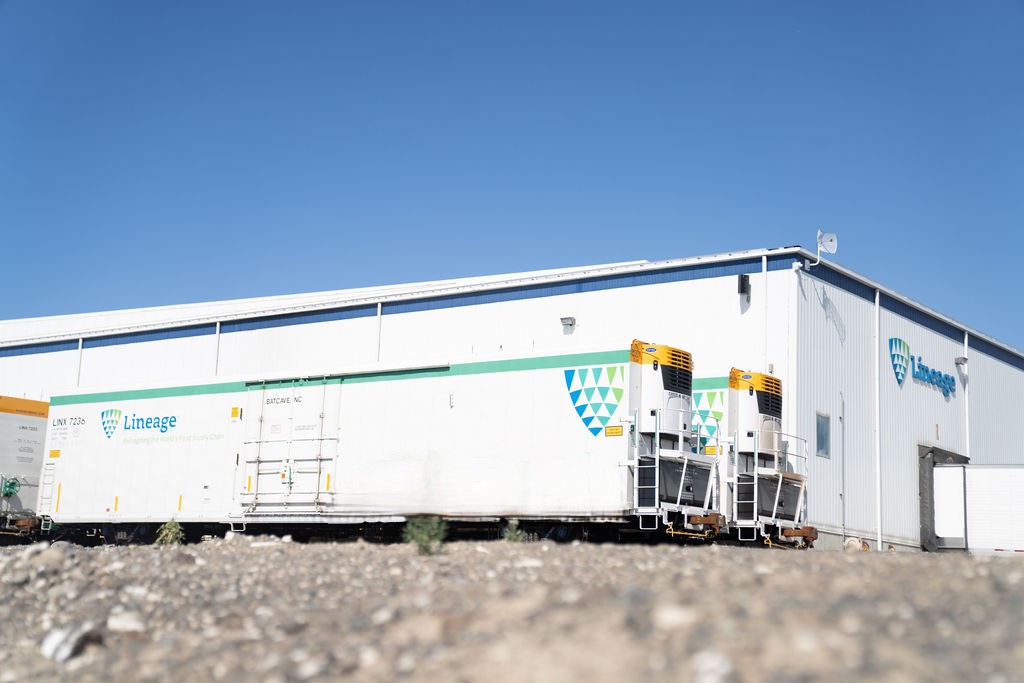
Lineage's temperature-controlled railcar fleet includes:
Choose Lineage for temperature-controlled rail solutions

Unlock rail opportunities
Helping customers take advantage of rail.
We handle the complexity
Rail logistics managed by experienced teams.
Designed for food products
Built around temperature-sensitive supply chains.
More than transportation
Solving different cold chain challenges with rail
Temperature-controlled rail can support different supply chain goals depending on how products move through your network. Explore how rail can help support long-haul transportation, inventory positioning, import/export movement and transportation flexibility.
-
Moving high volumes across long distances
Temperature-controlled rail can help move large volumes of frozen and refrigerated products across long-haul transportation lanes. For food manufacturers, processors and distributors moving product between regions, rail may provide additional transportation capacity while helping support consistent product flow.
Additional services that support long-haul rail transportation:
- Managed & On-Demand Transportation – Coordinate first- and final-mile truck transportation.
- Cold Storage Warehousing – Store and stage inventory throughout the transportation journey.
-
Positioning inventory closer to customers
Many companies use temperature-controlled rail to move inventory closer to destination markets before demand occurs. By positioning product near distribution hubs and population centers, businesses can support replenishment strategies, seasonal demand planning and regional distribution operations.
Additional services that support inventory positioning:
- Cold Storage Warehousing – Store inventory near customer markets.
- Port-Centric Warehousing – Position product near major ports and transportation hubs.
-
Supporting import and export operations
International food supply chains often require coordination between ports, inland facilities, transportation providers and customs agencies. Temperature-controlled rail can help connect imported and export-bound products with cold storage, transload operations and destination markets throughout North America.
Additional services that support import and export logistics:
- Freight Forwarding – Coordinate international shipment planning and execution.
- Customs Brokerage – Help manage customs documentation and compliance requirements.
-
Building transportation flexibility
Transportation needs can change due to seasonality, market conditions, customer demand or capacity constraints. Temperature-controlled rail gives companies another transportation option that can work alongside truckload and other transportation strategies to help maintain product movement.
Additional services that support transportation flexibility:
- Managed & On-Demand Transportation – Adapt truck transportation capacity as needs change.
- Less Than Truckload (LTL) – Move smaller shipments without requiring a full truckload.
Frequently asked questions about temperature-controlled rail
-
Just about any packaged or unitized product can move by temperature-controlled rail.
Common products include:
- Frozen foods
- Refrigerated foods
- Fresh produce
- Juice and specialty beverages
- Wine and spirits
- Food ingredients
- Chemicals
- Other temperature-sensitive products
Because railcars are available in both refrigerated and insulated configurations, temperature-controlled rail can support a wide variety of cold chain transportation needs.
-
Many companies use temperature-controlled rail to increase transportation flexibility while moving large volumes of product across long distances.
Potential benefits include:
- Transportation cost savings
- Additional transportation capacity
- Equipment availability
- Greater network flexibility
- Environmental advantages compared to truck-only transportation
The right transportation strategy depends on the product, lane and supply chain requirements, but rail can often provide an effective alternative for long-haul movements.
-
A refrigerated railcar can move significantly more product than a typical truckload.
Depending on the product, a single refrigerated railcar can hold:
- Up to 180,000 pounds of product
- Up to 8,700 cubic feet of cargo
- Approximately 84 conventional grocery pallets
In many cases, a single railcar can carry the equivalent of more than four truckloads of freight.
-
Rail and truck transportation each serve different roles in the cold chain.
Rail is often less expensive for long-distance transportation and can move larger volumes of product in a single shipment. It can also provide environmental benefits due to its efficiency. However, rail requires rail-served facilities and generally involves more planning than truck transportation.
Many companies use both rail and truck transportation together. Rail handles the long-haul movement, while truck transportation supports first-mile pickup and final-mile delivery. Lineage helps customers coordinate both.
-
LINX railcars are part of Lineage's private fleet of refrigerated and insulated railcars.
For customers, LINX railcars provide access to dependable equipment supported by Lineage's rail operations, maintenance programs and transportation expertise. They are designed specifically for temperature-controlled transportation and help provide additional peace of mind when moving temperature-sensitive products.
-
A reefer is a refrigerated railcar that uses an onboard refrigeration system to actively maintain product temperatures throughout transit.
Reefers are commonly used to transport frozen foods, refrigerated foods and other products that require precise temperature control from origin to destination.
-
An insulated railcar is designed to help protect products from outside temperature fluctuations during transportation.
Unlike a reefer, an insulated railcar does not use an active refrigeration unit. Instead, it relies on highly insulated walls, ceilings and floors to help maintain product temperatures throughout the journey.
-
Managing rail transportation involves much more than simply providing railcars.
Lineage supports customers through:
- Railcar management
- Transportation planning and network design
- Railroad negotiations
- 24/7 rail tracking and reporting
- Door security monitoring
- Temperature monitoring
- GPS location monitoring
- Refrigeration system maintenance and support
- Loading and unloading coordination
This allows customers to incorporate rail into their transportation strategy while relying on a team experienced in temperature-controlled logistics.
-
Rail-served cold storage facilities are warehouses that can receive and ship products directly by rail.
These facilities help connect transportation and storage, allowing products to move efficiently between railcars, warehouse storage and truck transportation. Lineage operates approximately 80 rail-served facilities across its network, helping customers connect rail transportation with broader cold chain operations.
-
Rail transportation is designed to move large volumes of freight efficiently across long distances.
Because a single railcar can carry the equivalent of multiple truckloads, rail often provides transportation cost advantages on certain lanes. The ability to move more product in a single shipment can help improve transportation efficiency while reducing reliance on truck capacity alone.
-
Temperature-controlled rail can help companies move large volumes of product while improving transportation efficiency. Because a single railcar can carry the equivalent of multiple truckloads, rail may help reduce emissions compared to truck-only transportation strategies. For customers using Lineage Rail Services (LRS), these benefits can add up over time.
In 2025, Lineage Rail Services (LRS) helped customers achieve:
- 308,586 metric tons of CO₂ savings
- 30,727 shipments moved by rail
- 109,940 truckloads removed from the road
These figures represent LRS activity during calendar year 2025.
-
Rail transloading is the process of transferring products between railcars and trucks.
This approach allows companies to take advantage of rail transportation for long-haul movements while still reaching locations that are not directly served by rail. Transloading can help improve flexibility, support distribution strategies and connect rail transportation with broader cold chain networks.
-
Temperature-controlled rail is one part of a larger cold chain.
Lineage helps customers connect rail transportation with cold storage warehousing, managed transportation, import and export services and supply chain expertise. Rather than treating rail as a standalone service, Lineage helps integrate it into broader transportation and logistics strategies.
This connected approach can help customers build transportation networks that balance capacity, efficiency and product protection while maintaining visibility across the cold chain.
Temperature-controlled rail connected to integrated cold chain support
Temperature-controlled rail works alongside Lineage’s broader transportation, warehousing and integrated logistics solutions, helping product move efficiently across long-haul transportation lanes and regional distribution networks.
-
Cold storage warehousing
Temperature-controlled storage connected to inbound and outbound rail flows.
-
Port-centric warehousing
Rail-connected storage and transload support near ports and key trade hubs.
-
Managed & On-Demand Transportation
Truck transportation aligned with rail schedules and final delivery needs.
-
Freight Forwarding
Coordinated import, export and cross-border support connected to rail transportation.